01
Purchase Vacant Land
Finance a qualifying vacant parcel, building lot, infill property or development site where private mortgage financing is appropriate.
Private mortgage financing for qualifying vacant land, raw land, building lots, infill sites and development properties across Ontario. Lendworth reviews land purchases, refinances and equity requests based on the property, access, servicing, zoning, marketability, mortgage position and proposed repayment strategy.
Initial review available • Final financing subject to approval and conditions

Land is underwritten differently from a completed home. A vacant parcel may have no building, municipal services or established residential use, so lenders need to understand the land itself before determining what mortgage structure may be available.
Private land financing may provide an alternative where conventional lenders do not finance the property type, require a different down-payment structure or cannot accommodate the overall transaction.
Finance a qualifying vacant parcel, building lot, infill property or development site where private mortgage financing is appropriate.
Replace existing financing, address a mortgage maturity or restructure debt secured against qualifying vacant or development land.
Explore Refinancing →Available equity in qualifying land may support additional financing for an approved property, investment, development or business need.
A land loan should not be assessed on value alone. The lender needs to understand the physical parcel, legal use, marketability and realistic path to repayment.
Parcel size, location, surrounding uses, neighbourhood demand and intended use help define the lending profile.
Legal road access and the availability of water, sewer, hydro, natural gas or private servicing can affect value and lender appetite.
Current zoning, permitted uses, planning status, severance potential and proposed development may form part of the review.
Acceptable land value, existing registered debt and the requested mortgage determine proposed leverage and security position.
The lender needs a reasonable repayment plan through sale, refinance, construction financing or another acceptable source.
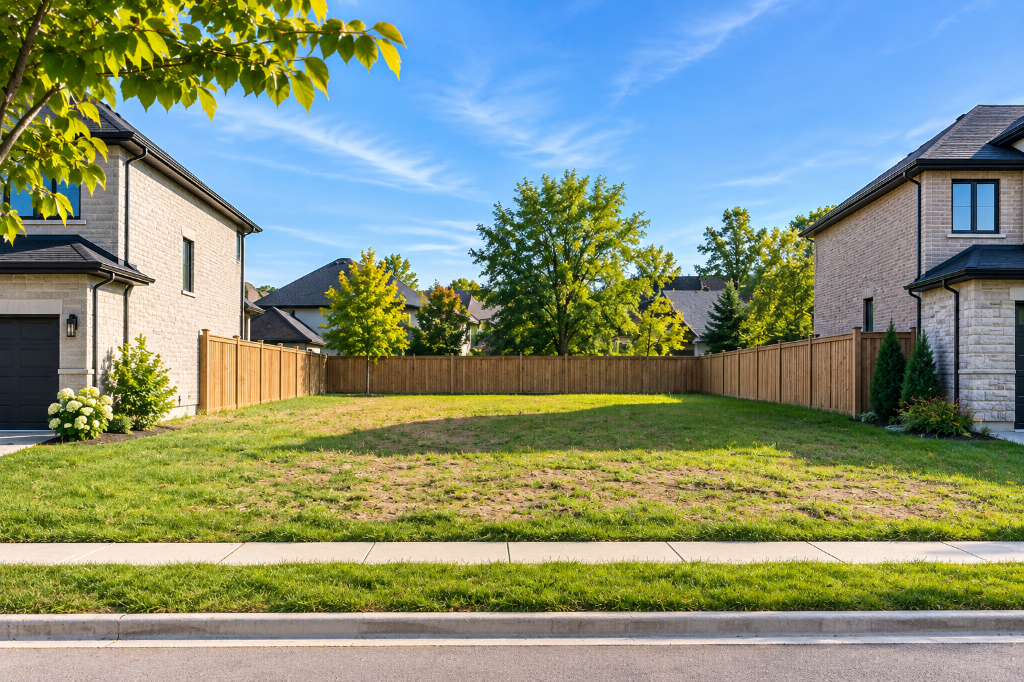
Private lenders may consider land that does not fit conventional residential lending. The available mortgage amount and structure vary significantly by property type, location and lender.
Active farm and agricultural properties may require a different underwriting approach. Review our farm loan options for qualifying agricultural properties.
Two land parcels with similar acreage can have completely different financing profiles. A serviced building lot in an established market is different from raw acreage with limited access or uncertain planning status.
For land intended for a future build, the current land loan should also be considered alongside the eventual construction financing strategy.
The parcel needs to be clearly identified so the lender can review its location, boundaries and surrounding market.
The purchase price and acceptable property value help determine potential financing for an acquisition or refinance.
Legal access, zoning, permitted use, utilities and municipal or private servicing may materially affect the mortgage structure.
Mortgages, liens, easements and other registered interests can affect available equity and lender security.
The lender considers why the financing is required and how the mortgage is expected to be repaid, refinanced or discharged.
Private land financing can support different stages of a property or development strategy where the security, use of funds and repayment plan are acceptable to the lender.
Acquire qualifying vacant land, a building lot, infill property or development parcel.
Replace existing financing, address a maturity or restructure debt secured against land already owned.
Refinance Options →Financing may support approved surveys, planning, architectural, engineering or other pre-development expenses.
Qualifying financing may help address approved property carrying or servicing costs while the land moves toward its next stage.
A land loan may support an approved financing requirement while severance, subdivision or planning work is underway.
Land financing may serve as an interim mortgage before an eligible project becomes ready for construction financing.
Construction Loan Options →These products can all involve real estate, but they solve different problems. Choosing the right structure depends on what stage the property and transaction are currently in.
Mortgage financing secured primarily against the land itself before an active construction project is ready for a construction facility.
Financing structured around an eligible active construction or major renovation project.
Short-term financing intended to solve a defined timing gap before another identified source of repayment becomes available.
A completed home generally has established services, improvements and a broad residential resale market. Vacant and development land can be more dependent on planning, access, servicing and future use, which is why land lenders often assess leverage more conservatively.
Location, parcel configuration, road access and the number of likely buyers can affect how a lender views the land as mortgage security.
Zoning is important, but servicing, access, conservation restrictions, planning status and physical characteristics can also affect financing.
There is no universal land-loan percentage that applies to every property. Available leverage depends on the parcel and overall risk.
The process starts with the property itself, then considers the financing requirement, proposed use and realistic repayment strategy.
Provide the address or legal description, purchase price or estimated value and basic details about the parcel.
Tell us the amount required, whether it is a purchase or refinance and what the financing needs to accomplish.
The land, access, servicing, zoning, title, valuation, mortgage position and exit strategy are reviewed.
If approved, required valuation, documentation, lender conditions and legal work are completed before mortgage funding.
Answers to common questions from Ontario land buyers, landowners, investors and developers reviewing private land mortgage options.
Financing for qualifying custom homes, construction projects and major renovations once the project reaches the appropriate stage.
Construction Loan Options →Short-term property-backed financing for a defined temporary funding gap and identified repayment source.
Bridge Loan Options →Property-secured mortgage financing for qualifying agricultural, farm and rural properties.
Farm Loan Options →Private mortgage financing for qualifying Ontario rental and investment properties.
Investment Property Options →Send us the property address or legal description, purchase price or estimated value, existing mortgage balances, amount required, intended use and proposed repayment strategy. Lendworth can review the parcel and determine what private land-financing options may be available.
Land financing is subject to lender approval and requirements. Loan-to-value, down payment or equity requirements, interest rate, fees, mortgage amount, term, documentation requirements and conditions vary based on the property type, location, access, servicing, zoning, marketability, mortgage position, borrower circumstances, intended use, repayment strategy and overall transaction. Valuation, appraisal, legal, lender and brokerage fees may apply. Lendworth Financial Corp. is licensed as an Ontario Mortgage Brokerage, FSRA Licence #13494.
Private mortgage financing for qualifying vacant land, raw land, building lots, infill sites and development properties across Ontario. Lendworth reviews land purchases, refinances and equity requests based on the property, access, servicing, zoning, marketability, mortgage position and proposed repayment strategy.
Initial review available • Final financing subject to approval and conditions
Land is underwritten differently from a completed home. A vacant parcel may have no building, municipal services or established residential use, so lenders need to understand the land itself before determining what mortgage structure may be available.
Private land financing may provide an alternative where conventional lenders do not finance the property type, require a different down-payment structure or cannot accommodate the overall transaction.
Finance a qualifying vacant parcel, building lot, infill property or development site where private mortgage financing is appropriate.
Replace existing financing, address a mortgage maturity or restructure debt secured against qualifying vacant or development land.
Explore Refinancing →Available equity in qualifying land may support additional financing for an approved property, investment, development or business need.
A land loan should not be assessed on value alone. The lender needs to understand the physical parcel, legal use, marketability and realistic path to repayment.
Parcel size, location, surrounding uses, neighbourhood demand and intended use help define the lending profile.
Legal road access and the availability of water, sewer, hydro, natural gas or private servicing can affect value and lender appetite.
Current zoning, permitted uses, planning status, severance potential and proposed development may form part of the review.
Acceptable land value, existing registered debt and the requested mortgage determine proposed leverage and security position.
The lender needs a reasonable repayment plan through sale, refinance, construction financing or another acceptable source.
Private lenders may consider land that does not fit conventional residential lending. The available mortgage amount and structure vary significantly by property type, location and lender.
Active farm and agricultural properties may require a different underwriting approach. Review our farm loan options for qualifying agricultural properties.
Two land parcels with similar acreage can have completely different financing profiles. A serviced building lot in an established market is different from raw acreage with limited access or uncertain planning status.
For land intended for a future build, the current land loan should also be considered alongside the eventual construction financing strategy.
The parcel needs to be clearly identified so the lender can review its location, boundaries and surrounding market.
The purchase price and acceptable property value help determine potential financing for an acquisition or refinance.
Legal access, zoning, permitted use, utilities and municipal or private servicing may materially affect the mortgage structure.
Mortgages, liens, easements and other registered interests can affect available equity and lender security.
The lender considers why the financing is required and how the mortgage is expected to be repaid, refinanced or discharged.
Private land financing can support different stages of a property or development strategy where the security, use of funds and repayment plan are acceptable to the lender.
Acquire qualifying vacant land, a building lot, infill property or development parcel.
Replace existing financing, address a maturity or restructure debt secured against land already owned.
Refinance Options →Financing may support approved surveys, planning, architectural, engineering or other pre-development expenses.
Qualifying financing may help address approved property carrying or servicing costs while the land moves toward its next stage.
A land loan may support an approved financing requirement while severance, subdivision or planning work is underway.
Land financing may serve as an interim mortgage before an eligible project becomes ready for construction financing.
Construction Loan Options →These products can all involve real estate, but they solve different problems. Choosing the right structure depends on what stage the property and transaction are currently in.
Mortgage financing secured primarily against the land itself before an active construction project is ready for a construction facility.
Financing structured around an eligible active construction or major renovation project.
Short-term financing intended to solve a defined timing gap before another identified source of repayment becomes available.
A completed home generally has established services, improvements and a broad residential resale market. Vacant and development land can be more dependent on planning, access, servicing and future use, which is why land lenders often assess leverage more conservatively.
Location, parcel configuration, road access and the number of likely buyers can affect how a lender views the land as mortgage security.
Zoning is important, but servicing, access, conservation restrictions, planning status and physical characteristics can also affect financing.
There is no universal land-loan percentage that applies to every property. Available leverage depends on the parcel and overall risk.
The process starts with the property itself, then considers the financing requirement, proposed use and realistic repayment strategy.
Provide the address or legal description, purchase price or estimated value and basic details about the parcel.
Tell us the amount required, whether it is a purchase or refinance and what the financing needs to accomplish.
The land, access, servicing, zoning, title, valuation, mortgage position and exit strategy are reviewed.
If approved, required valuation, documentation, lender conditions and legal work are completed before mortgage funding.
Answers to common questions from Ontario land buyers, landowners, investors and developers reviewing private land mortgage options.
Financing for qualifying custom homes, construction projects and major renovations once the project reaches the appropriate stage.
Construction Loan Options →Short-term property-backed financing for a defined temporary funding gap and identified repayment source.
Bridge Loan Options →Property-secured mortgage financing for qualifying agricultural, farm and rural properties.
Farm Loan Options →Private mortgage financing for qualifying Ontario rental and investment properties.
Investment Property Options →Send us the property address or legal description, purchase price or estimated value, existing mortgage balances, amount required, intended use and proposed repayment strategy. Lendworth can review the parcel and determine what private land-financing options may be available.
Land financing is subject to lender approval and requirements. Loan-to-value, down payment or equity requirements, interest rate, fees, mortgage amount, term, documentation requirements and conditions vary based on the property type, location, access, servicing, zoning, marketability, mortgage position, borrower circumstances, intended use, repayment strategy and overall transaction. Valuation, appraisal, legal, lender and brokerage fees may apply. Lendworth Financial Corp. is licensed as an Ontario Mortgage Brokerage, FSRA Licence #13494.